Menu

Orgs We've Helped!

TEXT or CALL me!

407-791-1360 in Tampa, FL

Find me on LinkedIn!

NAA Credentials

Benefit Auction Specialist (BAS)

Editor of this How-to Charity Auction book

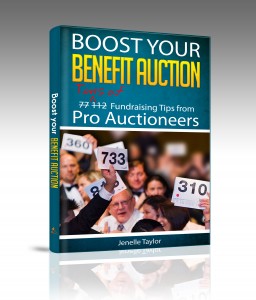
Boost Your Benefit Auction book

“70-Point Venue Checklist” FREE DOWNLOAD

Free Gala Venue Checklist

Grab this 70-point Venue Checklist when planning your Gala Fundraiser!

Find It Now

>

© 2025 GALA GAL, Inc. - All rights reserved.

Firstyme WordPress Theme.
Designed by Charlie Asemota.

►BIG Giving went up in 2013!

While the numbers aren’t out yet about how much average Americans gave last year, gifts over $1M are up over 2012, and there’s nothing bad about that!

I’m glad to hear that the largest single gift came from Facebook’s founder, and wowed to see that he and his new wife’s gift is valued at nearly one billion dollars. With a B.

The largest donation of 2013 came from Facebook founder Mark Zuckerberg and his wife, Priscilla Chan, who announced in December that they had given 18 million shares of Facebook stock to the Silicon Valley Community Foundation. The gift was valued at more than $990 million. This was the first time donors under the age of 30 have made the nation’s largest philanthropic gift, according to the report.

Read about the Chronicle of Philanthropy’s report here, and hope some trickles down!

►Live Auctions and Opening Bids

Flummoxed about where to start live auction bidding?

Today one of the fabulous auctioneers who has attended my “BOOTCAMP for Benefit Auctioneers” course e-mailed me with this question:

There is much debate on “starting” bids at B&C (benefit & charity) auctions.  In commercial auctions we start where we think the FMV (fair market value) is….come down till we get a bid….and go till they stop.  I have used this technique in B&C’s but some people start way low and get more people involved.  I am really curious to get your perspective.  And….do you do it different if there is a minimum….consigned item?

If you’ve attended even one live auction, I bet you’ve wondered as each item is being described, “I wonder where the bidding is going to open?”

At your charity fundraising gala, many people in your audience have that question too! Attendees often come up to me at the Live Auction Preview Table and ask, “What’s the opening bid for this package?” My typical response is, “Well, it’s my job to help you win this item. Where would you like it to start?”

Where each live auction package opens for bidding sets the tone for fundraising. One school of thought says to open the bidding at a low level (10-35% of retail value) in hopes of getting more bidders to jump in and get caught up in the auction excitement. If the bidding starts low and doesn’t quickly get a bunch of bids, however, what does that say to the crowd?? It might be sending the message, no-one-wants-this-item, no-one-is-bidding, this-is-a-fire-sale-not-a-fundraiser.  Not the tone you want to set. On the other hand, if the audience perceives the opening bid to be so high that no one raises a bid card, you risk losing the auction participation and momentum.

Where to start the bidding on your charity gala’s live auction packages is a top concern faced by every similar event, and it’s why you want to trust your auction to a licensed, professional auctioneer who’s got both experience and specific fundraising training. A volunteer board member, DJ, or TV personality trying to be your auctioneer probably didn’t devote 90 minutes prior strategically gathering info at the Live Auction table, and he or she has much less experience with auction psychology, reading the crowd on the fly and knowing by instinct when to keep asking for a dollar amount and when to change things up.

I personally don’t like the technique used in commercial auctions of stating the retail price (fair market value) and quickly coming down (“Let’s start the bid at $5000, $5000 where, gimme $1000 and go…”). I’m not a fan of it when I attend an auction, and I think it’s confusing to a novice, non-auction savvy audience. Benefit audiences are on the whole unsure about the live auction bidding process, so I am always careful to be clear, easily understood, easy to follow and inviting to all.

I replied to my colleague that I honestly decide where to open each live auction package after I chat with all the attendees during the preview time. By then I know how much interest there is in each package and how much folks are expecting to pay. I auction by gut and by perceived value. For things $1000 and below, I often open at retail, but the values aren’t published, so I’m opening where I expect the crowd to join me. If it’s a private chef dinner for 6, then that certainly sounds more prestigious and inviting than $300 (the retail value) so I’d start at $300 and expect to go up. For items more in the $2K-$10K range, most of the time I open at 35-50%.

I rarely have to deal with consignment (items that aren’t donated but are a cost to the charity) because I don’t encourage it, but for that headliner consignment cost trip I follow the same as above typically: start at cost if the payback amount is $1000 or below, and for higher cost consignment items (some packages can require a payback cost of $5000-$10K or more!) I start below the minimum and take my chances. Auctioning items with high minimum required payback costs is nerve-wracking and not for the inexperienced DJ or Board member to try!!

Because auctioning items with a consignment payback cost always has the risk the bidding falling off and not reaching the minimum amount needed to sell it, I work with my clients to get a commitment in writing for how they want me to handle it if a consignment item doesn’t hit the minimum. As the auctioneer, I can either pass the item (awkward!), keep asking (and asking and asking and asking..UGH!) or disclose there’s a price below which I can’t sell it. Since none of those are very good options, I encourage the groups I work with to strive for 100% donated auction items. You keep all the money with none of the potential headaches and hassles. But, to do or not to do consignment is a whole ‘nother discussion, so let’s wrap this up by sharing how my colleague responded to the reply I sent him:

I think I will change my practice here.  That makes so much sense….and I do like to work off the cuff so to speak and change as I determine what the crowd is doing.  You may absolutely use the question and my name if you like.

Thanks Jenelle.

No, thank you, David Runte of Worstell Auction Company in Texas, for spurring a valuable discussion and helping so many groups raise more money!
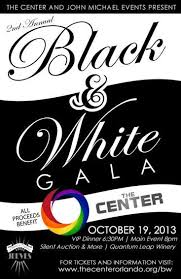
►Live Auction for the Black and White Gala in Orlando Oct. 19th

Jenelle Taylor Auctioneer for the Gala October 19

Awesome live auction event in Orlando last weekend!

I was honored to be the auctioneer for a great event last Saturday.

This just appeared in my Inbox, and I can’t stop smiling! Thank you to DJ Ronny!


I have been a DJ and event producer in Orlando for over 15 years now and I have to say your auctioneer abilities at the Black and White Gala last Saturday was absolutely the best I’ve observed. Starting off with a giveaway contest to juice up the crowd and then working the room like the charming and consummate professional that you are, was brilliant. I have sat through so many agonizing charity auctions over the years where the idea of a root canal seemed like a pleasant alternative to the teeth pulling witnessed by “celebrity” or downright incapable auctioneers simply chosen because they were free or run the organization. You are proof positive that spending money for a professional is absolutely the best route to financial success in a live auction. I will be coming to you anytime I need such an amazingly talented auctioneer.

Sincerely,

Ron

►”Big things. Big. Huge.”

Book Key Person of Influence by Daniel Priestley

What will YOU do when you become a Key Person of Influence in the industry you love?

So many exciting things are happening in my life since last May, and it started with a 1-Day business seminar in Tampa called “Key Person of Influence.”

I am thrilled to be accepted into such an incredibly high-achieving group of professionals, and during this 7-month journey we are going to manifest some crazy, ridiculous, industry-changing new developments. The wheels are already in motion to debut services for nonprofits and auctioneers that I have been dreaming about offering for more than six years.

Stay with me, folks. Big things are coming. Big. Huge.

Entrepreneurs, the 1-day KPI seminar can change your life. I took 15 pages of notes, met founder Daniel Priestley, and leaned in. Get your own goosebumps at Key Person of Influence.

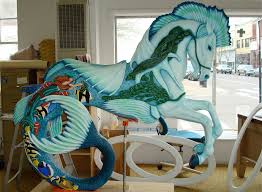
►Your Auction is like this Carousel

photo of Albany Oregon carousel horse

Heartwarming story of calling in favors and working together creating a memorable, signature brand.

I had to smile at this lovely one-page story in today’s Parade newspaper insert, “Riding High: A Struggling Town Creates a Little Magic.”

I saw so many parallels to charities I work for:

  • affected by the economy
  • needing to reinvent itself
  • it began with one person’s idea
  • folks were skeptical at the start
  • started with only $150!

And I see several inspiring lessons in this uplifting tale:

  • get small parts of your big picture dream sponsored by supporters
  • use every person’s connections to call in favors and ask for whatever you need to be given (‘somebody’s aunt knows somebody’s uncle who comes down to lend a hand.’)
  • as parts of your larger project are completed, promote them around town for visibility
  • encourage lots of people in the community to get involved

If you think of your silent and live auction acquisition plan like this amazing carousel project, you can create an auction event for your guests that is unique to your organization and serves to raise your visibility in the community.

Think about what amazing auction package(s) you can design by calling in favors from your supporters. Your idea might be a behind-the-scenes experience at a sporting event or concert, an amazing private dining event with music, luxury transportation, and fine wines, or a “spa day for six” package. Brainstorm every aspect of the experience you’ll need donated, and then ask everyone to call in favors from folks they already know (no cold-calling required!). As you get great auction items confirmed, promote them on your website, on Twitter updates, and on your Facebook page.

You’ll gradually build support for unusual, creative auction offerings which raise your profile in the community and involve many supporters in your future success.

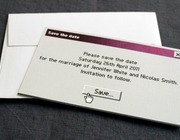
►Jazz Up Your Save-the-Date Cards!

Image of Save the Date card

Creative social media spin on a boring Save the Date card

Do you send a Save-the-Date card to your mailing list? Do you send it as soon as you sign the contract for your venue, or wait until 2-3 months before your big day?

Here’s a great, creative example with a hip nod to our obsession with social media, available on Etsy for $35 http://tinyurl.com/etsysavethedatecard


This sample was part of  the “10 Geeky Wedding Invitations” article http://tinyurl.com/geekyinvitations packed with fresh ways to get guests to save your special date on their social calendars.

Check it out, and this year, add some personality to your standard Save-the-Date card.


►Planning Your Fund-a-Need Appeal

Photo of GALA GAL Jenelle Taylor

Fund a Need donation appeal, 5 steps to success

Structuring a Successful Appeal


Determine your Fund-a-Need goals. 

    
Do you envision presenting the audience with one group goal, such as building the playground or raising enough to buy the $250,000 piece of hospital equipment? This strategy has the advantage of helping everyone in the audience feel able to contribute, regardless of amount, and works well with handheld bidding technology. Alternatively, some appeals promote several specific levels for donations, and tie these to the mission by explaining what those dollars can provide. For instance, $2500 furnishes a room in our shelter; $1000 provides legal service to a battered woman; $500 provides transportation assistance; $250 funds clothing and necessities.

Prepare the presentation.                            

In order to inspire giving, you need to communicate on an emotional level. Some groups show a video of their programs in action, and others invite a recipient to speak. The most important part of your message, however, must be a compelling story. Statistics rarely motivate people to give, but genuine emotion can. Take note, however, that even the most tragic story must be delivered with a hopeful resolution; your supporters want to feel uplifted by the transformations your services provide.


Let people know you will be asking.        

In the weeks leading up to your appeal, ask for commitments from your best supporters. It helps your audience tremendously when a bid card goes up in the air as soon as the auctioneer asks for money. Having donors already identified and ready to start the giving encourages the rest of the audience to join in.


Use matching incentives to boost funds.

Ask your major sponsors to offer a challenge match if a goal for dollars raised or number of participants is reached (“ABC Company will donate $10,000 when we raise $10,000”).

Know how you will track the donations.

Will the auctioneer call out bid numbers? Is there an envelope on the table? Will volunteers be coming around?

►Dine Around the World auction idea

image of the world

Image courtesy of tungphoto/freedigitalphotos.net

One of my favorite ideas is Dine Around the World! Have the Board members or committee gather donations for 12 different types of cuisine, typically gift certificates for $100 or more, and sell it as one delicious culinary adventure anyone will enjoy 🙂

Try any combination, starting with

French, Brazilian, German, Japanese, Mexican, Cuban, Greek, Italian, Thai, Chinese, Indian, African, British, Jamacian, Vietnamese, and many other yummy options!

►Selected as a Presenter, Summit 2013

Photo of Jenelle Taylor, CAI BAS

Selected as a presenter for the Benefit Auction Summit, National Auctioneers Association (NAA)

We’re celebrating!!

Just got word that the committee for the Benefit Auction Summit chose my session “62 Ways to Create More Prepared, Engaged Bidders”!

This is the only national conference specifically for fundraising auctioneers, and it is a BIG honor to present to such an accomplished group of professionals from across the country.

I’m excited to share the “62 Ways” 90-minute session because it’s all about helping my peers help YOU raise more money. We understand that you only have this 1 night, once a year to host your attendees, so we want to work with you to maximize every way to make it easy for people to spend money!

I’ll be covering

  • 20 ways to create the best Live Auction display tables
  • 22 things your auctioneer can do to help people get excited by the auctions and also
  •  20 things you can do as the non-profit to help your audience come prepared to both attend AND spend.

The best part for you?

All of my GALA GAL clients – the organizations I help with their events – you get all 62 Ways to Create Prepared Bidders included, everyday, as part of our consulting relationship. (If you want this for your event, shoot me an e-mail to check if your date is available here.) You’re the reason I do what I do, and why I’m excited to share these ideas with other high-profile auctioneers across America.

To learn more about what Benefit Auctioneers do when they get together each year, you can find content from the Summit in 2010 (my presentation here), and I’ve shared some takeaways  from the other presenters that year here and 2011 Summit here. Apparently I still have to post notes from last year!

►”America’s Worst Charities”

Tampa Bay Times

“America’s Worst Charities” June 9, 2013 3-part series

Back in the headlines, and not in a good way.

“America’s Worst Charities” is the result of a yearlong collaboration between the Tampa Bay Times and California-based The Center for Investigative Reporting, the nation’s largest and longest serving nonprofit newsroom dedicated to watchdog journalism. CNN joined the partnership in March.

I’m all for investigative journalism, and I agree that this story needs to be told. We all want any unscrupulous groups to be exposed, so that America’s donated dollars go instead to groups where they’ll do the most charitable good.

We’ve talked about this before, however, lamenting the possibility that today’s overwhelmed reader takes in the negative sound bite “worst charities” without putting the headlines in context. This year-long series focuses on 50 of  5,800 groups identified nationwide that spend the majority of funds raised on expenses rather than causes. It’s great information that’s important to expose…but there are 1.6 million nationally registered non-profits (and nearly 200,000 congregations), so those 5,800 offenders represent about 1/3 of 1% of America’s charities.

I wish there was such sensational press coverage about the more than 99.6% of known non-profits striving to do the right thing with donors’ dollars. The article says,

“several watchdog organizations say charities should spend no more than 35  percent of the money they raise on fundraising expenses”

Many of you have expenses much, much less than 35% of your intake.

All the more reason for you to tell your amazing story. Share where donated dollars go via your website, Facebook, Twitter, and annual reports. Take 10 minutes to get the Guidestar Valued Partner badge and issue a press release!

You’re out there killing yourself to raise money so you can feed more families, clothe more kids, finally find a cure. It’s okay – no, it’s imperative – that you take time to share your story. We can’t let the bad press be America’s soundbite.